
Building Physician-Scientist Skills in R Programming: A Short Workshop Report
DOI:
https://doi.org/10.21106/ijtmrph.418Keywords:
- R Programming,
- Statistical Analysis Training,
- Physician-Scientists,
- Low- and Middle-Income Countries
Abstract
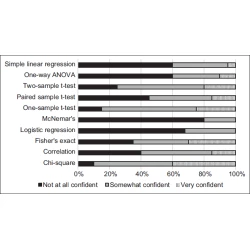
Introduction: Statistical analysis programs require coding experience and a basic understanding of programming, skills which are not taught as part of medical school or residency curricula. Methods: We conducted a five-day course for early-career Nigerian physician-scientists interested in learning common statistical tests and acquiring R programming skills. The workshop included didactic presentations, small group learning activities, and interactive discussions. A baseline questionnaire captured participant demographics and solicited participants’ level of confidence in understanding/performing common statistical tests. REDCap questionnaires were emailed to obtain feedback on educational format and content. A postworkshop assessment covered participants’ overall impression of the program. Results: A total of 23 participants attended the program. Most participants were male (n=14, 60.9%) and at an early stage in their career (assistant professor, n=20, 87.0%). Approximately 70% of respondents indicated having received some prior training in statistics. The proportion of participants without experience using R and SAS software (90% and 85%, respectively) was greater than the corresponding proportions for Stata (55%) and SPSS (20%). Prior to the workshop, most respondents expressed being “not at all confident” in performing one-way ANOVA (60%), logistic regression (68%), simple linear regression (60%), and McNemar’s test (80%). There was a statistically significant post-workshop improvement in the level of confidence in understanding and performing common statistical tests. The course was rated on a 0-100 scale as “moderately difficult” (mean ± SD: 51.7 ± 19.5). Most participants felt comfortable in putting the knowledge learned into practice (82.2 ± 17.1). Conclusion and Public Health Implications: Introductory R can be taught to junior physician-scientists in resource-limited settings and can inform the development and implementation of similar training initiatives in analogous settings.
Downloads
Most read articles by the same author(s)
- Deepa Dongarwar, Hamisu M Salihu, COVID-19 Vaccination Rates by Global Universal Health Care Coverage Status , International Journal of Translational Medical Research and Public Health: Vol. 5 No. 1 (2021): The International Journal of Translational Medical Research and Public Health (IJTMRPH)
- Amina A. Umar, Yusuf D. Jobbi, Hassan Adam Murtala, Aisha Adam Abdullahi, Muktar H. Aliyu, Sani H. Aliyu, Eknath Naik, Ololade D. Adeyemi, Deepa Dongarwar, Hamisu M. Salihu, Socioeconomic and Clinical Determinants of Nutritional Phenotypes among Children with Sickle Cell Disease , International Journal of Translational Medical Research and Public Health: Vol. 9 No. Continuous (2025): The International Journal of Translational Medical Research and Public Health (IJTMRPH)
- Hamisu M. Salihu, Aisha A. Abdullahi, Hassan A. Murtala, Amina Aminu, Muhammad A. Abbas, Abubakar L. Yusuf, Muktar H. Aliyu, Sani H. Aliyu, Ololade D. Adeyemi, Deepa Dongarwar, Jordi B. Torrelles, Gambo Aliyu, Predictors of Human Immunodeficiency Virus (HIV) Acquisition among Children 0–14 Years in Nigeria , International Journal of Translational Medical Research and Public Health: Vol. 9 No. Continuous (2025): The International Journal of Translational Medical Research and Public Health (IJTMRPH)
- Sitratullah O Maiyegun, Korede K Yusuf, Deepa Dongarwar, Sahra Ibrahimi, Chioma Ikedionwu, Hamisu M Salihu, COVID-19: How Can Doulas Support Pandemic Control? , International Journal of Translational Medical Research and Public Health: Vol. 5 No. 2 (2021): The International Journal of Translational Medical Research and Public Health (IJTMRPH)
- Fatima Usman, Zubairu Iliyasu, Hamisu M Salihu, Muktar H Aliyu, COVID-19 Pandemic and Medical Education in Nigeria , International Journal of Translational Medical Research and Public Health: Vol. 5 No. 2 (2021): The International Journal of Translational Medical Research and Public Health (IJTMRPH)
- Sara F Khan, Deepa Dongarwar, Hamisu M Salihu, Intimate Partner Violence Among Adolescent Latina Mothers and Their Reproductive Outcomes: A Systematic Review , International Journal of Translational Medical Research and Public Health: Vol. 6 No. 2 (2022): The International Journal of Translational Medical Research and Public Health (IJTMRPH)
- Musa Baba Maiyaki, Garba Dahiru, Amina Abdullahi, Tijjani Hussaini, Sabitu Shuaibu, Mohammed Auwal Ibrahim, Auwal Adamu, Nura Mohammed, Mahmoud Habib Maje, Hamisu M Salihu, Profiles and Characteristics of Patients with Mild to Moderate COVID -19 Disease Phenotypes in a Teaching Hospital in Kano, Northern Nigeria , International Journal of Translational Medical Research and Public Health: Vol. 6 No. 1 (2022): The International Journal of Translational Medical Research and Public Health (IJTMRPH)
- Samuel E Willis, Deepa Dongarwar, Jonnae O Atkinson, Jalyce Taylor, Derek L Lockett, Eunique L Williams, Hamisu M Salihu, Comparing Homicidal Ideations with Homicides/Assaults Victimization among Various Racial/Ethnic Groups in the United States , International Journal of Translational Medical Research and Public Health: Vol. 5 No. 2 (2021): The International Journal of Translational Medical Research and Public Health (IJTMRPH)
- Deepa Dongarwar, Karla Moriel, Kobby A Wiafe, Hamisu M Salihu, Sex and Age-Based Differences in Adult Acute Myeloid Leukemia Hospitalizations in the United States, 2009-2018 , International Journal of Translational Medical Research and Public Health: Vol. 6 No. 1 (2022): The International Journal of Translational Medical Research and Public Health (IJTMRPH)
- Hamisu M Salihu, Brisa Y Garcia, Deepa Dongarwar, Racial/Ethnic Disparities in Receipt of Lung Transplant and In-Hospital Mortality among Pediatric and Adolescent Patients in the United States , International Journal of Translational Medical Research and Public Health: Vol. 5 No. 2 (2021): The International Journal of Translational Medical Research and Public Health (IJTMRPH)
Similar Articles
- Musa Baba Maiyaki, Garba Dahiru, Amina Abdullahi, Tijjani Hussaini, Sabitu Shuaibu, Mohammed Auwal Ibrahim, Auwal Adamu, Nura Mohammed, Mahmoud Habib Maje, Hamisu M Salihu, Profiles and Characteristics of Patients with Mild to Moderate COVID -19 Disease Phenotypes in a Teaching Hospital in Kano, Northern Nigeria , Vol. 6 No. 1 (2022): The International Journal of Translational Medical Research and Public Health (IJTMRPH)
- Bushra Elbashir, Msab Al-dkheel, Hamad Aldakheel, Naif Aruwished, Nasser Alodayani, Hypertension in Saudi Arabia: Assessing Life Style and Attitudes , Vol. 4 No. 1 (2020): The International Journal of Translational Medical Research and Public Health (IJTMRPH)
- Elizabeth Armstrong Mensah, Maria Adjini, Bria Pringle-Weston, Akwasi Akosah, Rachael Addo, Late Dementia Diagnosis Among Elderly Minority Populations in the United States: Causes, Effects, and Addressing Inequities , Vol. 8 No. Continuous (2024): The International Journal of Translational Medical Research and Public Health (IJTMRPH)
- Patricia Mutale, Mwenya Kwangu, Chishala Mirriam Kapambwe Muchemwa, Moono Silitongo, Mutale Chileshe, Knowledge and Preconception Care Seeking Practices among Reproductive-age Diabetic Women in Zambia , Vol. 1 No. 2 (2017): The International Journal of Translational Medical Research and Public Health (IJTMRPH)
- Uksim Qadri, Bashir Ahmad Fomda, Saleem Javaid Wani, Shugufta Roohi, Sanam Rasool Wani, Hepatitis A and E: Prevalence, Epidemiology and Co-infection among Patients with Acute Viral Hepatitis , Vol. 9 No. Continuous (2025): The International Journal of Translational Medical Research and Public Health (IJTMRPH)
- Oluwatosin Olateju, Ilona Argirion, Melanie Bolden, Stephanie Klapper, Jonas Nguh, Chidubem Egboluche, Addressing Health Disparities in Maryland Communities: Insights from a Public Health State Affiliate and Strategic Advocacy Recommendations , Vol. 9 No. Continuous (2025): The International Journal of Translational Medical Research and Public Health (IJTMRPH)
- Matiur Rahman, Kaoser Bin Siddique, Mohammad Mahbub Ur Rahim, Cancer Registry in Bangladesh: Challenges and Opportunities , Vol. 8 No. Continuous (2024): The International Journal of Translational Medical Research and Public Health (IJTMRPH)
- Romuladus E Azuine, Gopal K Singh, Shanita D Williams, Evangeline T Oparaocha, Shiv C Mathur, Translating Public and Population Health Research into Policy and Actions: The International Journal of Translational Medical Research and Public Health (IJTMRPH) , Vol. 1 No. 1 (2017): The International Journal of Translational Medical Research and Public Health (IJTMRPH)
- Hamisu M Salihu, Brisa Y Garcia, Deepa Dongarwar, Racial/Ethnic Disparities in Receipt of Lung Transplant and In-Hospital Mortality among Pediatric and Adolescent Patients in the United States , Vol. 5 No. 2 (2021): The International Journal of Translational Medical Research and Public Health (IJTMRPH)
- Musa M Dogara, Saadatu Ahmad, Babalola J Balogun, Salwa S Dawaki, Muzammil B Mustapha, Aminu U Abdurrahman, Lawal Bala, Abubakar Zakari, David U Livingstone, Schistosomiasis and Associated Risk Factors Among School-Aged Children in Northern Nigeria , Vol. 4 No. 2 (2020): The International Journal of Translational Medical Research and Public Health (IJTMRPH)
<< < 6 7 8 9 10 11 12 13 14 15 > >>
You may also start an advanced similarity search for this article.
Published
How to Cite
Issue
Section
License
Copyright © 2022 Muktar H Aliyu, Mahmoud U Sani, Donna J Ingles, Fatima I. T siga-Ahmed, Baba M Musa, M. Shannon Byers, Deepa Dongarwar, Hamisu M Salihu, C. William Wester. Published by Global Health and Education Projects, Inc., USA.

This is an open-access article distributed under the terms of the Creative Commons Attribution-NonCommercial-ShareAlike 4.0 International License , which permits others to remix, transform, and build upon the work non-commercially, provided the original author is credited and the new creations are licensed under the same terms.



 .
.

