
A Narrative Review of the Pathophysiology of Mucormycosis Infection Among COVID-19 Patients in India: Epidemiology and Clinical Implications
DOI:
https://doi.org/10.21106/ijtmrph.409Keywords:
- Mucormycosis,
- COVID-19,
- Diabetes Mellitus (DM),
- Immunosuppression,
- Steroids,
- Tocilizumab (TCZ) India
Abstract
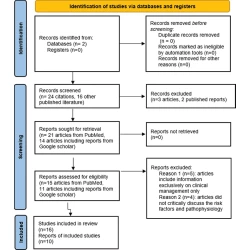
Background and Objective: During the second COVID-19 wave in India (April to May 2021), mucormycosis has affected the ‘recovering’ and the ‘recovered but vulnerable’ COVID-19 patients across the country. This review synthesizes information on the risk factors and pathophysiology of mucor infection among COVID-19 patients, which in turn supplements existing information from public health and clinical sciences. The study objective includes analyzing the morbidity of mucor infection and its pathophysiological mechanism, during India’s second wave of the COVID-19 pandemic. Methods: We conducted a systematic literature search of PubMed and Google Scholar databases, using the following text terms: ‘COVID-19,’ ‘SARS-CoV-2,’ ‘mucormycosis,’ and ‘zygomycosis.’ We identified 24 citations and 16 other published literature which described mucormycosis in association with COVID-19. The relevant literature was analyzed for findings on the risk factors of mucor infection and its outcome among individuals with COVID-19. Results: The risk factors for mucor infection include diabetes mellitus, immunosuppression (for example, the administration of steroids/monoclonal antibodies/broad-spectrum antibiotics), prolonged stay in the intensive care unit, co-morbidities such as malignancy or post-transplantation, and prophylactic therapy with voriconazole (generic anti-fungal). The second wave of COVID-19 in India was more severe due to the increased occurrence of systemic inflammation and coagulopathy, which can cause direct damage to the blood vessels resulting in injuries to organs such as the liver, kidney, and heart. Conclusion and Implications for Translation: The increased incidence of mucormycosis during the second wave of the COVID-19 pandemic in India (April to May 2021) was due to a combination of immunocompromising effects of corticosteroids, microangiopathy of diabetes, and peripheral microthrombi among COVID-19 patients. The indiscriminate usage of steroids for treating COVID-19 disease seems to be the likely cause, including the use of immunomodulatory drugs such as interleukin 6 inhibitors like tocilizumab (TCZ) for patients with severe COVID-19. Clinical practices should adopt a judicious approach towards the prescription of steroids and monitoring blood sugar for all COVID-19 patients admitted to the hospital as well as those isolated at home (even during the post-recovery period). The high mortality rate of mucor infection demands appropriate primary prevention measures, as well as early diagnosis and treatment modalities for improving patient survival.
Downloads
Similar Articles
- Gopal K. Singh, Hyunjung Lee, Lyoung Hee Kim, Romuladus E Azuine, State and Metropolitan Area Disparities in Long COVID-19 and Related Symptoms among US Adults, June-October 2022 , Vol. 7 No. 2 (2023): The International Journal of Translational Medical Research and Public Health (IJTMRPH)
- Gopal K. Singh, Lyoung Hee Kim, Hyunjung Lee, Romuladus E Azuine, Disparities in Prevalence of COVID-19, Long COVID, Disease Severity, and Mental Health Outcomes among US Adults by Industrial Sector of Employment, September-November 2022 , Vol. 7 No. 2 (2023): The International Journal of Translational Medical Research and Public Health (IJTMRPH)
- Ajoke Olutola Adagbada, Jacob Itopa Yisau, Toun Wuraoluwa Fesobi, Muinah Adenike Fowora, Tajudeen Akanji Bamidele, Toyosi Yekeen Raheem, Adenike Shola Aiyedogbon, Ibilola Omolopo, Abraham Ajayi, Olufemi Samuel Amoo, Chinonso Ikpo, Grace Abosede Akintunde, Bamidele Abiodun Iwalokun, Stella Ifeanyi Smith, Babatunde Lawal Salako, Community-acquired Klebsiella pneumoniae – Its Virulence and Antimicrobial Resistance Genes Complement in Participants Presenting for COVID-19 Testing in Lagos State, Nigeria , Vol. 10 (2026): The International Journal of Translational Medical Research and Public Health (IJTMRPH)
- Sorochi Iloanusi, Osaro Mgbere, Nchebe-Jah R Iloanusi, Ismaeel Yunusa, Ekere J Essien, COVID-19 Related Misconceptions and Prevention Practices Among Residents of a Populous Commercial City in Nigeria , Vol. 5 No. 2 (2021): The International Journal of Translational Medical Research and Public Health (IJTMRPH)
- Gopal K Singh, Hyunjung Lee, Marked Disparities in COVID-19 Prevalence by Racial/Ethnic, Socioeconomic, Geographic, and Health Care Characteristics, United States, January – April, 2021 , Vol. 5 No. 2 (2021): The International Journal of Translational Medical Research and Public Health (IJTMRPH)
- Judith Eberhardt, Jonathan Ling, A Qualitative Exploration of Perceptions of the COVID-19 Vaccine in the United Kingdom During the Later Stages of the Vaccine Rollout , Vol. 6 No. 1 (2022): The International Journal of Translational Medical Research and Public Health (IJTMRPH)
- Nasir Ilyas, Romuladus E Azuine, Alina Tamiz, COVID-19 Pandemic in Pakistan , Vol. 4 No. 1 (2020): The International Journal of Translational Medical Research and Public Health (IJTMRPH)
- Matiur Rahman, Md. Aminur Rahman, Md. Kaoser Bin Siddique, Md. Rahidul Islam, Mohammad Mahbub ur Rahim, Impact of COVID-19 on Essential Health Care of Rural People in Northern Bangladesh: A Cross-Sectional Study , Vol. 7 No. 1 (2023): The International Journal of Translational Medical Research and Public Health (IJTMRPH)
- Patricia Mutale, Mwenya Kwangu, Chishala Mirriam Kapambwe Muchemwa, Moono Silitongo, Mutale Chileshe, Knowledge and Preconception Care Seeking Practices among Reproductive-age Diabetic Women in Zambia , Vol. 1 No. 2 (2017): The International Journal of Translational Medical Research and Public Health (IJTMRPH)
- Dania Matta, Patti Herring, W. Lawrence Beeson, Seth Wiafe, The Role of Perceived Susceptibility, Perceived Severity, Perceived Barriers and Benefits in COVID-19 Vaccine Hesitancy and Uptake Among Outpatient Surgery Nurses in the United States: A Qualitative Study , Vol. 7 No. 1 (2023): The International Journal of Translational Medical Research and Public Health (IJTMRPH)
You may also start an advanced similarity search for this article.
Published
How to Cite
Issue
Section
License
Copyright © 2022 Vinod K Ramani, Radheshyam Naik. Published by Global Health and Education Projects, Inc., USA.

This is an open-access article distributed under the terms of the Creative Commons Attribution-NonCommercial-ShareAlike 4.0 International License , which permits others to remix, transform, and build upon the work non-commercially, provided the original author is credited and the new creations are licensed under the same terms.



 .
.

